
Introduction
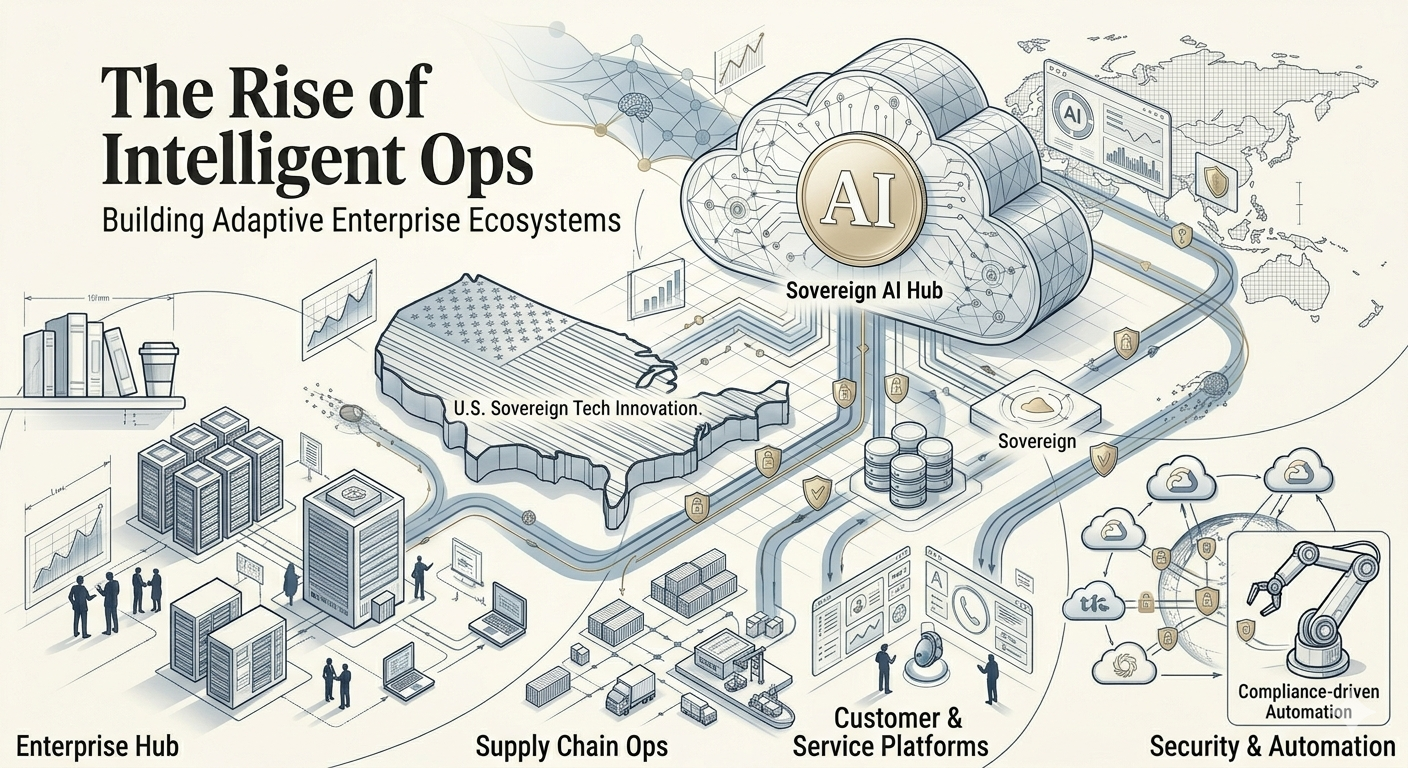
For decades, enterprise operations were defined by rigid hierarchies and monolithic software systems. If a market shift occurred, changing a business process could take months of re-coding and retraining. However, in 2026, we are witnessing the birth of Intelligent Ops (Intelligent Operations). This isn’t just a tech upgrade; it’s an evolution of the enterprise into a living, breathing ecosystem that learns from every transaction.
The Anatomy of an Adaptive Ecosystem
Unlike traditional operations, Intelligent Ops relies on a “feedback loop” architecture. Every part of the business—from supply chain logistics to customer support—is instrumented with AI sensors.
- Modular Architecture: Monolithic ERPs are being replaced by “composable” modules. If your logistics provider changes, you don’t rewrite the system; you simply swap the AI-driven logistics module.
- Self-Healing Workflows: When a delay is detected in a shipping route, Intelligent Ops doesn’t just send an alert. It autonomously analyzes alternative routes, calculates cost-impact, and re-routes the shipment before a human even knows there was a problem.
- Cognitive Load Balancing: Intelligent systems monitor employee burnout and task density, automatically shifting administrative workloads to AI agents during peak periods.
The Shift from RPA to Agentic AI
In the past, we used Robotic Process Automation (RPA) to mimic human clicks. Intelligent Ops uses Agentic AI. These are autonomous agents that understand “goals” rather than “scripts.” Instead of telling a bot “Copy this data to that sheet,” you tell the Intelligent Ops layer: “Optimize our inventory for the upcoming holiday rush based on last year’s sentiment analysis.”
Strategic Benefits for 2026 Businesses
- Resilience: Adaptive ecosystems thrive on volatility. While competitors struggle to adjust to inflation or supply shocks, Intelligent Ops enterprises pivot in real-time.
- Hyper-Personalization: Operations can now support “segments of one,” allowing a company to offer custom manufacturing or bespoke services at the cost of mass production.
- Data Democracy: Intelligent Ops bridges the gap between the boardroom and the warehouse. Real-time dashboards provide “ground truth” data, eliminating the “filtered” reporting that often hides operational inefficiencies.






Leave a Reply