
Introduction
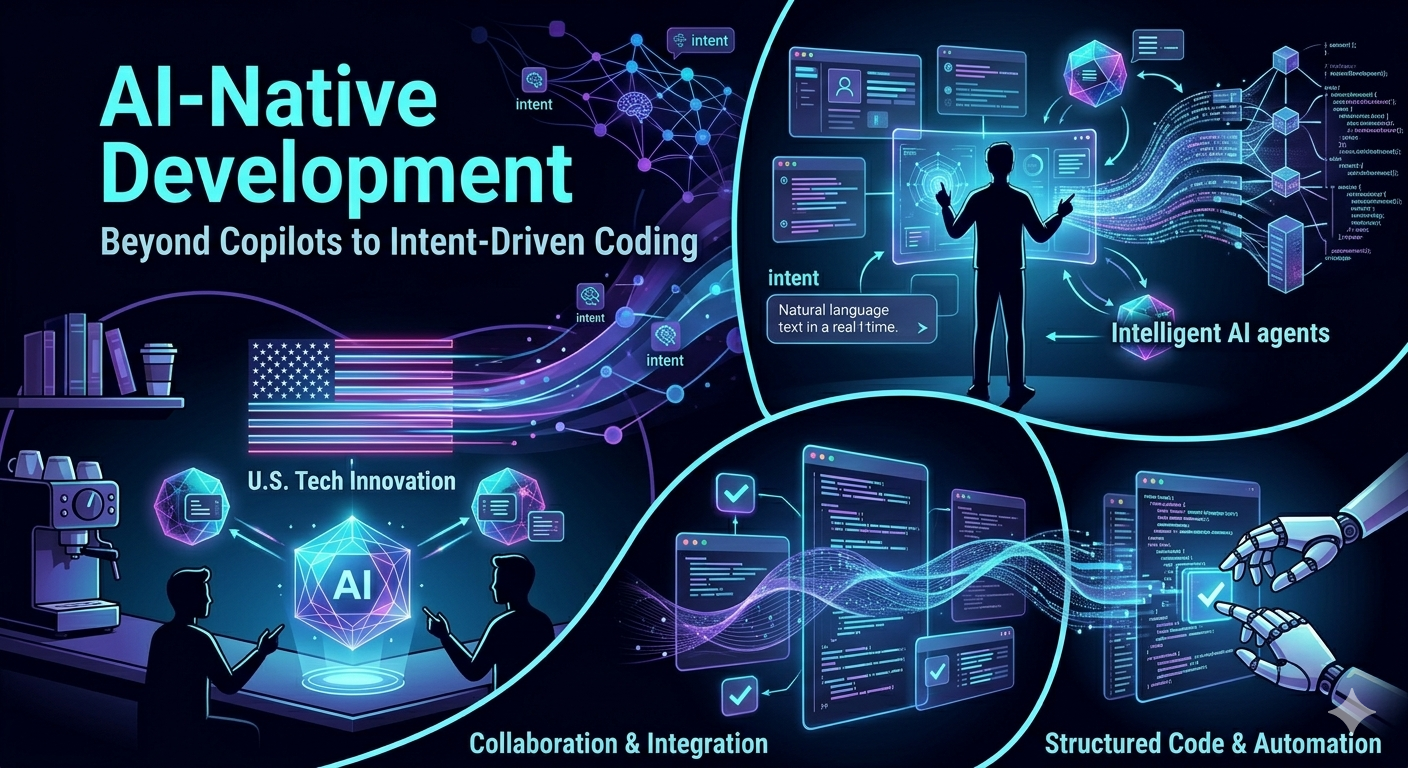
The software development landscape has undergone a seismic shift. Just a few years ago, AI “copilots” were seen as luxury assistants—tools that could suggest a snippet of Python or help debug a stubborn loop. However, as we move through 2026, we have entered the era of AI-Native Development. We are no longer just “writing code” with AI help; we are expressing intent, and the AI is autonomously architecting the systems.
The Paradigm Shift: From Code to Intent
In traditional development, the bottleneck has always been translation—taking a business requirement and translating it into logic, syntax, and deployment scripts. AI-native development removes this friction. Modern Integrated Development Environments (IDEs) now function as orchestration engines. Developers act as “System Architects,” defining the desired outcome (the intent) while AI models handle the boilerplate, the unit testing, and the multi-platform optimization.
Why Intent-Driven Development Matters
- Velocity: Projects that once took months now move from concept to deployment in days.
- Accessibility: The barrier to entry for building complex software has lowered, allowing subject matter experts to create tools without deep syntax knowledge.
- Self-Healing Systems: AI-native code isn’t just written; it’s maintained. These systems can identify performance bottlenecks in real-time and suggest (or apply) patches autonomously.
The Role of the Human Developer
Does this mean the end of the programmer? Far from it. The focus has shifted from syntax to semantics. The modern developer must master:
- System Design: Understanding how various microservices interact.
- Security Oversight: Ensuring AI-generated code doesn’t introduce vulnerabilities.
- Prompt Engineering & Logic: Refining the “intent” to ensure the AI produces exactly what the business needs.






Leave a Reply