
Introduction
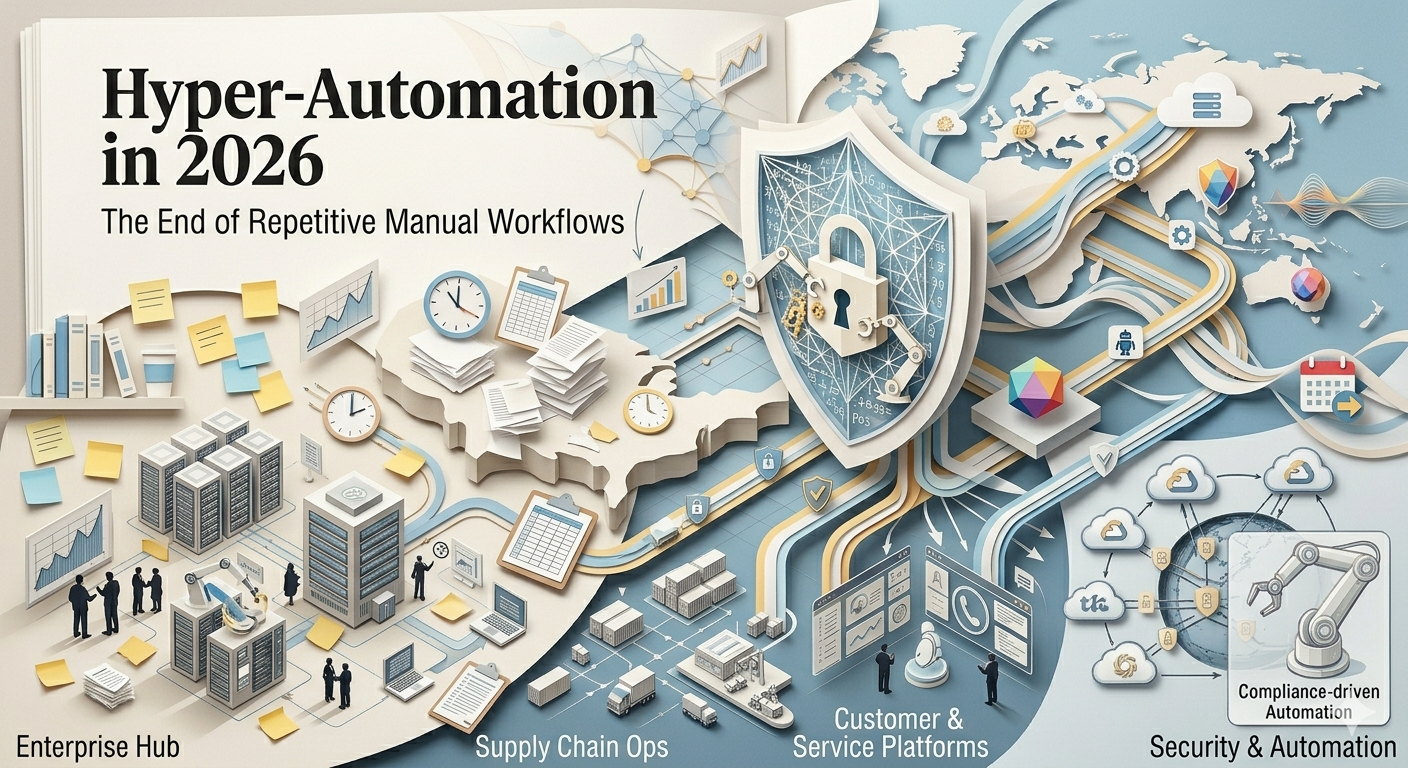
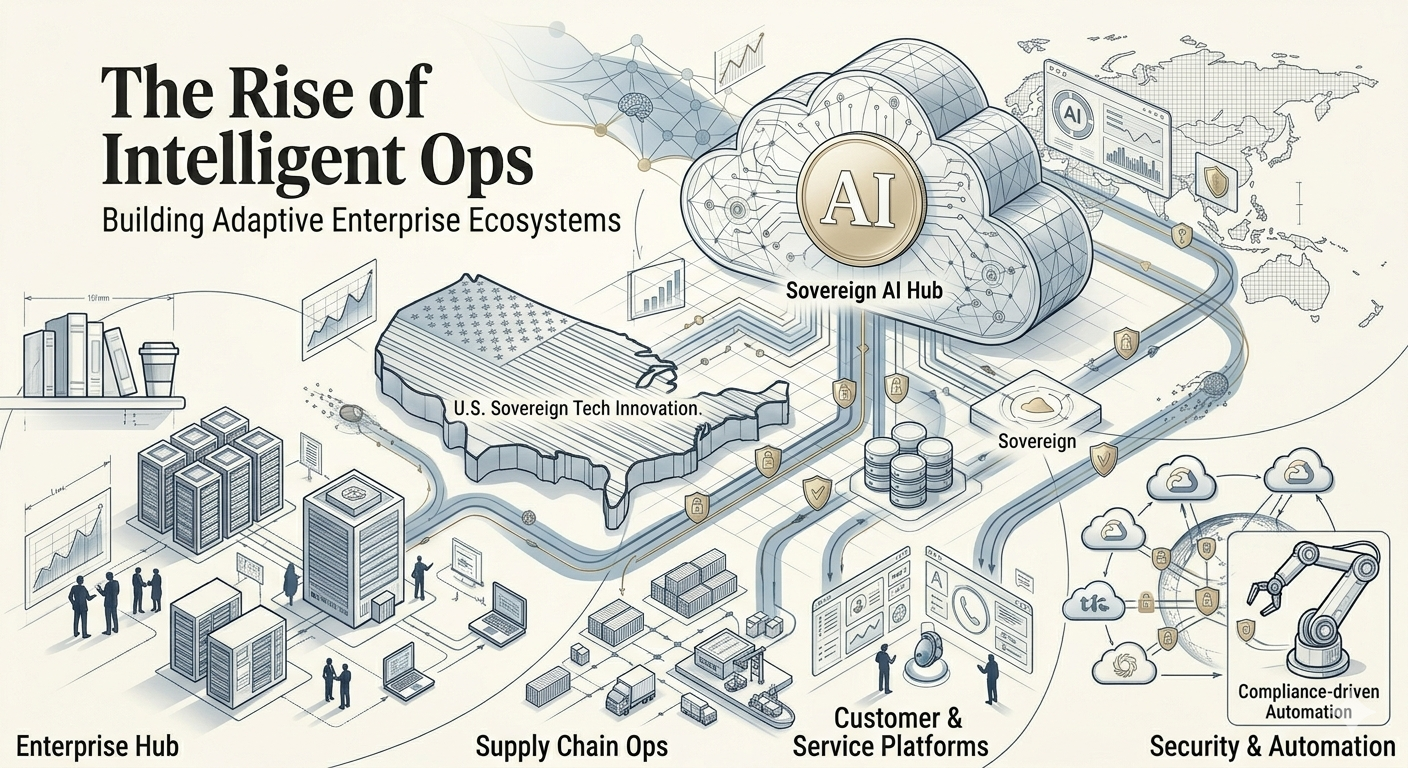
We have reached the “inflection point” of automation. In 2026, the goal is no longer to automate a few tasks; it is Hyper-Automation—the disciplined approach of identifying and automating every possible business and IT process. The result is the final elimination of “the grind”—those repetitive, soul-crushing manual tasks that have hampered productivity for decades.
The Tech Stack of Hyper-Automation
Hyper-automation isn’t one tool; it’s a “Franken-stack” turned into a symphony:
- Process Mining: AI tools that “watch” how work is done, identifying bottlenecks that humans don’t even notice.
- Low-Code/No-Code Platforms: Allowing non-technical managers to build their own automated workflows without waiting for the IT department.
- Generative AI Orchestration: Using Large Language Models (LLMs) to read documents, summarize meetings, and draft complex emails automatically.
Real-World Application: The “Zero-Touch” Office
Imagine a finance department where:
- Invoices are received via email.
- AI reads the invoice, verifies it against the purchase order, and checks for fraud.
- The payment is scheduled, and the ledger is updated.
- The only time a human is involved is if there is a massive discrepancy that exceeds a pre-set “confidence threshold.”
The Human Side: The Rise of the “Automation Champion”
As repetitive tasks vanish, the job market is shifting. We are seeing a rise in “Citizen Developers”—employees who understand the business logic and use automation tools to multiply their own output. In 2026, the most valuable skill isn’t “doing the work”—it’s “designing the system that does the work.”
Conclusion
For techpost.shop readers, hyper-automation represents the ultimate competitive advantage. Companies that embrace it are seeing 40% reductions in operational costs and 60% faster “time-to-market.” The “End of Manual Work” isn’t a threat to jobs; it’s a liberation of human creativity.






Leave a Reply