

Table of Contents
- Introduction to Generative AI Governance
- Why Generative AI Governance Matters
- Generative AI Governance and Judge Models
- Generative AI Governance and AI Permissions
- Generative AI Governance for Enterprise Risk
- Generative AI Governance and Human Oversight
- Generative AI Governance and AI Auditing
- The Future of Generative AI Governance
- Conclusion
Introduction to Generative AI Governance
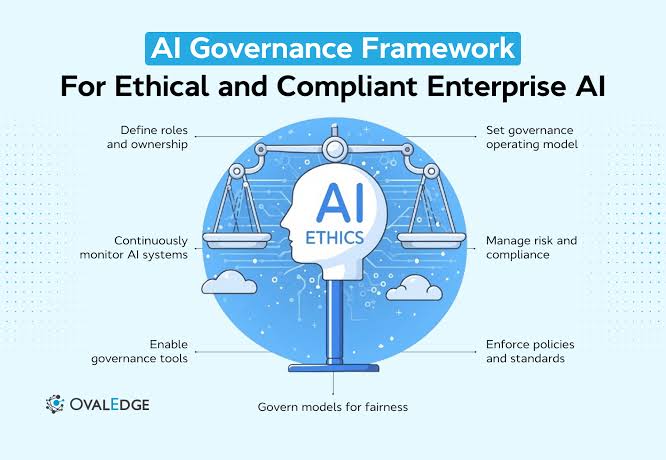
Generative AI Governance has become an essential part of enterprise AI strategy. In 2026, businesses are moving beyond the idea of simply deploying AI as quickly as possible. Companies increasingly need systems that can demonstrate how AI decisions are monitored, controlled, and reviewed. provides the policies, technical controls, and oversight processes needed to make enterprise AI safer, more accountable, and easier to audit.
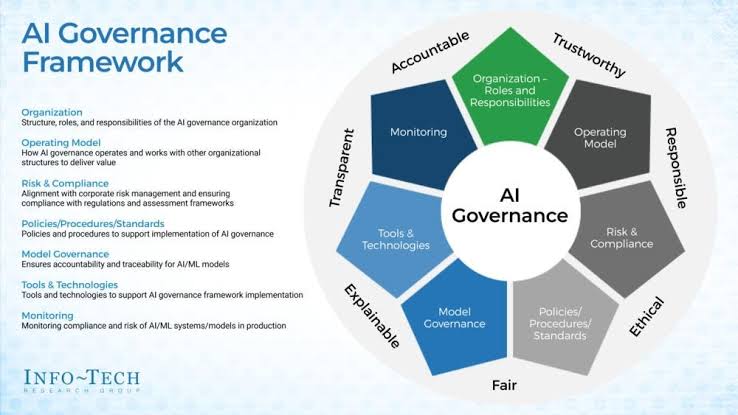
After growing concerns around AI hallucinations, privacy issues, security incidents, and unreliable outputs, organizations are paying greater attention to what happens after an AI model generates a response. Governance is no longer simply an administrative process; it can become an important part of responsible enterprise AI management.
Why Generative AI Governance Matters
helps organizations establish clear boundaries for how artificial intelligence can be used. A company may use generative AI for customer service, software development, marketing, financial analysis, or internal operations. Each application can carry different levels of risk.
Without clear governance, an AI system could potentially expose confidential information, produce inaccurate content, create biased recommendations, or take an action beyond its intended authority.
A strong governance framework establishes rules before these situations occur. It can define which data an AI system can access, what actions it can perform, when human approval is required, and how AI activity should be recorded.
Generative AI Governance and Judge Models
One emerging approach to is the use of AI systems that evaluate the output of other AI systems. These are often referred to as Judge Models.
The primary AI model generates an answer, recommendation, or action. A separate evaluation model then checks that output against predefined policies and requirements.
How Generative AI Governance Uses Judge Models
A Judge Model can evaluate an AI-generated response for specific risks before the response reaches a customer or becomes an automated action.
For example, an enterprise AI system could generate a customer response while a second model checks whether the response contains inappropriate language, sensitive information, potential bias, or restricted content.
If the evaluation system identifies a serious problem, the output can be blocked or sent to a human reviewer.
Generative AI Governance With Human Review
Human oversight remains important even when automated monitoring is used. A Judge Model can identify potential problems, but organizations may still require an AI Risk Officer or another authorized employee to review high-risk decisions.
This creates a layered approach in which AI handles routine monitoring while humans remain responsible for important or sensitive decisions.
Generative AI Governance and AI Permissions
Another major area of is controlling what AI agents are allowed to do.
As enterprise AI systems become more autonomous, organizations may give them access to business applications, databases, financial systems, and communication tools. Giving an AI agent unlimited permissions can create unnecessary risks.
Instead, companies can establish different Action Tiers based on the potential impact of an AI-generated action.
Generative AI Governance With Tiered Actions
Low-risk activities could include drafting internal emails, summarizing documents, or organizing public information. These actions may require little or no human intervention.
Medium-risk activities could involve procurement, customer account changes, or other operational tasks with financial or business consequences. These may require additional monitoring or spending limits.
Critical actions, such as large financial transfers or changes to important databases, can require direct approval from an authorized human.
This approach allows organizations to benefit from AI automation while keeping higher-risk activities under stronger control.
Generative AI Governance for Enterprise Risk
Generative AI Governance also plays an important role in enterprise risk management. Businesses need to understand not only what their AI systems can do, but also where those systems obtain information and how their outputs are evaluated.
Data governance is particularly important. Organizations should know whether training or operational data contains confidential, personal, copyrighted, or otherwise restricted information.
Model performance should also be monitored over time because an AI system that performs well during testing may behave differently after deployment or when exposed to new types of data.
Generative AI Governance and Human Oversight
Effective Generative AI Governance does not necessarily mean removing humans from AI workflows. Instead, it defines where human involvement is most valuable.
Routine, low-impact activities can potentially be automated, while high-impact decisions can require human authorization.
This creates a practical balance between automation and accountability. Employees can allow AI systems to handle repetitive work while maintaining control over decisions that could significantly affect customers, finances, security, or business operations.
Generative AI Governance and Human Approval
A Human Key can represent a technical approval mechanism in high-risk AI workflows. Before an AI agent completes a restricted action, an authorized human supervisor can provide cryptographic or system-level approval.
This can create a clear record showing who approved an action and when the approval occurred.
Generative AI Governance and AI Auditing
Another important part of Generative AI Governance is auditability. Enterprises increasingly need to understand the complete history of their AI systems.
An AI audit trail can record information such as the model version, input data category, generated output, automated checks, policy decisions, and human approvals.
This information can help organizations investigate incidents and demonstrate that appropriate controls were in place.
Generative AI Governance and Safety Lineage
Safety lineage describes the chain of information surrounding an AI system. Organizations may need to document where important data originated, how models were developed, what testing was performed, and how the system is monitored after deployment.
A clear safety lineage can make it easier for technical teams, auditors, executives, and regulators to understand how an AI system operates.
The Future of Generative AI Governance
The future of Generative AI Governance will likely involve closer integration between AI models, automated monitoring, cybersecurity systems, identity management, and enterprise policies.
Instead of treating governance as a separate process, companies can build governance directly into AI infrastructure. Models can be monitored continuously, permissions can be adjusted dynamically, and high-risk actions can automatically require additional approval.
This approach can help organizations scale AI while maintaining clearer boundaries around security, privacy, accountability, and responsible use.
Conclusion
Generative AI Governance is becoming a fundamental component of enterprise AI management. As organizations deploy increasingly capable AI models and autonomous agents, businesses need clear rules governing data access, model behavior, permissions, monitoring, and human approval.
Judge Models, tiered permissions, human oversight, and detailed audit trails can all contribute to a more controlled AI environment. The goal is not simply to prevent AI from making mistakes, but to create systems where organizations can understand, monitor, and manage those risks throughout the AI lifecycle.
For enterprises adopting generative AI in 2026, Generative AI Governance can provide the framework needed to move from experimental AI projects toward more accountable and scalable enterprise systems.