
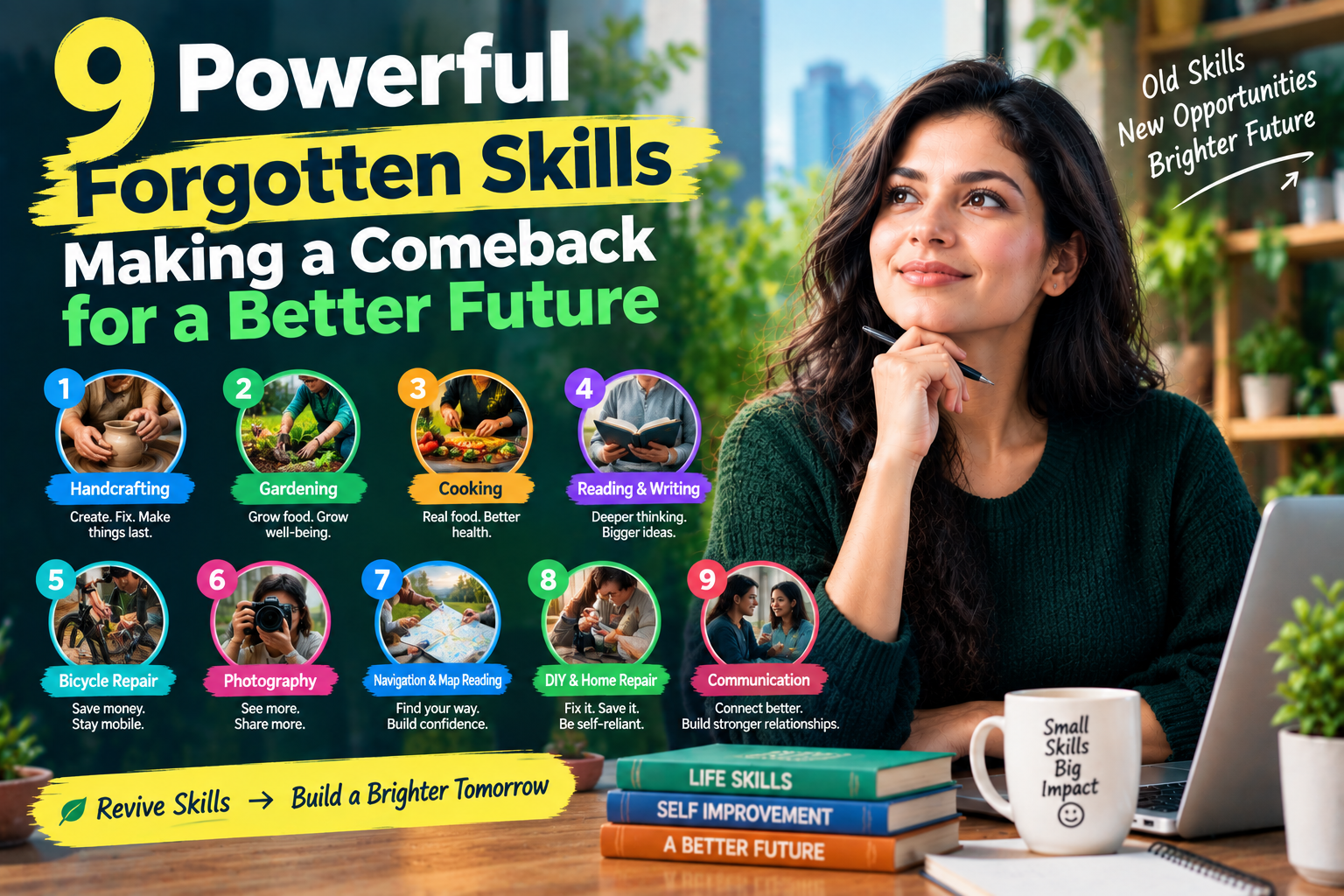

Forgotten Skills Making a Comeback is becoming an interesting trend as people look for practical abilities that were once common but are now less frequently practiced. In a world dominated by smartphones, automation, artificial intelligence, and digital services, many traditional skills are finding new relevance. From repairing everyday items to growing food, preserving information, and making things by hand, Forgotten Skills Making a Comeback can offer practical value in modern life.
These skills are not necessarily returning because technology is disappearing. Instead, people are rediscovering them because they can provide independence, creativity, sustainability, and useful knowledge. Some can even become hobbies, side businesses, or professional opportunities.
This article explores nine examples of Forgotten Skills Making a Comeback and explains why each skill is becoming interesting again in 2026.
Table of Contents: Forgotten Skills Making a Comeback
- Why Forgotten Skills Making a Comeback
- Traditional Cooking and Food Preservation
- Sewing and Clothing Repair
- Handwriting and Letter Writing
- Gardening and Seed Saving
- Basic Mechanical Repair
- Woodworking and Handcrafting
- Map Reading and Navigation
- Home Food Growing and Preserving
- Practical Communication Skills
- Benefits of Forgotten Skills Making a Comeback
- Final Thoughts on Forgotten Skills Making a Comeback
Why Forgotten Skills Making a Comeback Matters
The return of older practical abilities is connected to several modern lifestyle changes. People are increasingly interested in sustainability, self-reliance, mindful hobbies, repairing instead of replacing, and reducing unnecessary dependence on digital tools.
The idea behind Forgotten Skills Making a Comeback is not that everything from the past was better. Rather, certain skills remain useful even when technology has changed. Knowing how to repair a loose button, grow herbs, read a physical map, preserve food, or communicate without relying completely on digital platforms can provide practical advantages.
These abilities can also create a sense of accomplishment. Learning something with your hands often provides a different experience from consuming digital content throughout the day.
Traditional Cooking and Forgotten Skills Making a Comeback
Traditional cooking is one of the most recognizable examples of Forgotten Skills Making a Comeback. Many people are rediscovering recipes, cooking methods, fermentation techniques, bread making, and food preservation practices that were once passed between generations.
Modern convenience foods make everyday meals faster, but traditional cooking can provide greater control over ingredients and preparation. People interested in homemade bread, pickling, fermenting, drying, and preserving are bringing older techniques into modern kitchens.
This skill can also become creative. Instead of simply following old recipes, modern cooks often combine traditional methods with contemporary ingredients and presentation. This creates a connection between heritage and modern food culture.
Sewing and Forgotten Skills Making a Comeback
Sewing and clothing repair are another example of Forgotten Skills Making a Comeback. Fast fashion and inexpensive clothing have made replacing damaged garments easier in many places, but growing interest in sustainability has encouraged some people to repair, customize, and reuse clothes.
Basic sewing knowledge can be surprisingly useful. Fixing a button, repairing a small tear, shortening clothing, or adjusting a garment can extend its useful life.
More advanced sewing can become a creative hobby or even a small business. Handmade clothing, alterations, custom designs, and upcycling projects can give this traditional skill a modern purpose.
Clothing Repair and Forgotten Skills Making a Comeback
Clothing repair demonstrates how Forgotten Skills Making a Comeback can connect sustainability with practical everyday life. A person who learns basic stitching can reduce waste while saving money on simple repairs.
The growing popularity of visible mending and upcycling has also changed how repaired clothing is perceived. Instead of hiding every repair, some people intentionally make repairs part of the design.
Handwriting and Forgotten Skills Making a Comeback
Handwriting may seem outdated in a world of instant messaging, but it remains an important example of Forgotten Skills Making a Comeback. Journaling, handwritten notes, personal letters, calligraphy, and handwritten planning have become attractive to people seeking slower and more intentional activities.
Writing by hand can also be useful when digital devices are unavailable. Personal notes, emergency information, sketches, lists, and signatures are all situations where handwriting remains practical.
Calligraphy and decorative handwriting have also developed into creative hobbies. People can learn different writing styles and use them for invitations, artwork, stationery, and personalized gifts.
Gardening and Forgotten Skills Making a Comeback
Gardening is another major example of Forgotten Skills Making a Comeback. Growing vegetables, herbs, flowers, and fruit can provide a practical connection to food and nature.
Even people living in apartments can experiment with containers, balconies, windowsills, and small indoor growing systems. The basic knowledge of soil, planting, watering, composting, and seasonal growth can be valuable.
Gardening also teaches patience. Unlike many digital activities where results appear instantly, plants require consistent attention over time. That slower process is one reason gardening remains attractive to people looking for offline hobbies.
Seed Saving and Forgotten Skills Making a Comeback
Seed saving adds another layer to Forgotten Skills Making a Comeback. Saving seeds from suitable plants can help gardeners understand plant cycles and maintain varieties that grow well in their environment.
Although modern gardeners can easily purchase seeds, learning how seeds develop and how they can be collected and stored provides useful agricultural knowledge.
Basic Mechanical Repair and Forgotten Skills Making a Comeback
Basic repair knowledge is becoming another practical part of Forgotten Skills Making a Comeback. Many everyday objects are designed to be convenient, but knowing how to inspect, maintain, or repair simple mechanical problems can still be valuable.
Bicycle maintenance, basic tool use, furniture repair, and simple household fixes can reduce unnecessary replacements. These skills can also help people understand how everyday objects work.
Someone who becomes highly skilled may even turn repair knowledge into a career or local service. The exact opportunities depend on the type of repair and the local market.
Woodworking and Forgotten Skills Making a Comeback
Woodworking represents the creative side of Forgotten Skills Making a Comeback. Hand tools, basic joinery, furniture restoration, carving, and small woodworking projects are attracting people who want hands-on hobbies.
Digital manufacturing has changed the way products can be designed, but traditional woodworking still offers something different: the ability to physically transform raw material into a useful object.
Beginners can start with simple projects before progressing toward furniture, decorative pieces, or restoration work. Safety knowledge and proper equipment are important when learning this skill.
Map Reading and Forgotten Skills Making a Comeback
Digital navigation is convenient, but traditional map reading is another example of Forgotten Skills Making a Comeback. Understanding maps, directions, landmarks, distances, and geographic symbols can provide useful backup knowledge.
Outdoor enthusiasts, hikers, travelers, and emergency-preparedness communities may especially value these skills. A physical map does not depend on battery life, mobile data, or a particular application.
Learning basic navigation can also make travel more engaging because it encourages people to understand their surroundings instead of following a digital route without considering the landscape.
Home Food Preservation and Forgotten Skills Making a Comeback
Home food preservation is closely connected to Forgotten Skills Making a Comeback. Techniques such as drying, freezing, pickling, and other preservation methods have been used for generations.
Modern refrigeration has reduced the need for many traditional preservation practices, but people continue to explore them as part of cooking, gardening, sustainability, and self-reliance.
Food safety is especially important when learning preservation techniques. Traditional methods should be learned from reliable modern guidance so that food is handled and stored safely.
Practical Communication and Forgotten Skills Making a Comeback
Face-to-face communication is another area where Forgotten Skills Making a Comeback can be seen. Digital messaging has made communication extremely convenient, but listening carefully, having meaningful conversations, speaking clearly, and writing thoughtful messages remain valuable skills.
Strong communication can improve relationships, teamwork, customer service, and professional interactions. It is a skill that technology can support but cannot completely replace.
Learning to communicate without constantly checking a phone can also encourage more focused conversations. This makes traditional communication skills surprisingly relevant in a highly connected environment.
Comparison Table for Forgotten Skills Making a Comeback
| Skill | Modern Use | Main Benefit | Learning Difficulty |
|---|---|---|---|
| Traditional Cooking | Home meals | Creativity and independence | Medium |
| Sewing | Repairs and upcycling | Saves resources | Medium |
| Handwriting | Journaling and notes | Personal expression | Easy |
| Gardening | Home growing | Practical knowledge | Medium |
| Mechanical Repair | Household maintenance | Self-reliance | Medium |
| Woodworking | Crafts and furniture | Creativity | Medium |
| Map Reading | Travel and outdoor activities | Navigation | Medium |
| Food Preservation | Long-term storage | Practical knowledge | Medium |
| Communication | Personal and professional life | Better interaction | Easy |
Skill Categories in Forgotten Skills Making a Comeback
The following chart provides an illustrative view of how these skills can be grouped by their primary modern purpose. It is not a measurement of popularity or search volume.
Benefits of Forgotten Skills Making a Comeback
One of the biggest benefits of Forgotten Skills Making a Comeback is practical independence. People who understand basic cooking, repair, gardening, sewing, or navigation have additional options when everyday situations become inconvenient.
Another benefit is sustainability. Repairing an item instead of immediately replacing it can extend its useful life. Growing some food at home and reusing materials can also encourage more thoughtful consumption.
Creativity is another reason these skills are returning. Woodworking, sewing, cooking, calligraphy, gardening, and similar activities give people opportunities to create something tangible.
There is also a social benefit. Traditional skills can connect different generations. Parents, grandparents, teachers, and communities can pass knowledge to younger people, preserving useful techniques that might otherwise disappear.
How to Learn Forgotten Skills Making a Comeback
Learning Forgotten Skills Making a Comeback does not require becoming an expert immediately. Starting with one practical skill and practicing it consistently can be more effective than trying to learn everything at once.
Books, community classes, experienced family members, workshops, online tutorials, and local clubs can all provide learning opportunities. For skills involving tools, food safety, or potentially hazardous equipment, reliable instruction is especially important.
The best approach is to connect learning with a real project. Someone interested in sewing could repair an old shirt. A beginner gardener could grow herbs in containers. Someone interested in woodworking could build a simple shelf. Practical projects turn abstract knowledge into usable ability.
Why Forgotten Skills Making a Comeback Could Shape the Future
The return of traditional skills does not mean modern technology is going away. Instead, Forgotten Skills Making a Comeback may represent a balance between digital convenience and practical independence.
People can use technology to learn traditional skills, document projects, find communities, buy materials, and share their work. At the same time, the actual skill can remain hands-on and offline.
This combination makes traditional knowledge surprisingly relevant. The future may not be about choosing between old and new methods but about knowing when each approach is useful.
Final Thoughts on Forgotten Skills Making a Comeback
Forgotten Skills Making a Comeback highlights how useful knowledge from the past can find new meaning in modern life. Sewing, gardening, traditional cooking, map reading, repair, woodworking, food preservation, handwriting, and communication may look simple compared with advanced digital technologies, but they can provide practical and creative value.
The most interesting part of Forgotten Skills Making a Comeback is that these abilities can fit naturally into modern lifestyles. A person can use artificial intelligence at work while growing herbs at home, use GPS while understanding a physical map, or shop online while repairing an old piece of clothing.
As people continue searching for sustainability, creativity, independence, and meaningful offline activities, Forgotten Skills Making a Comeback could remain an interesting and useful trend throughout 2026 and beyond.